What is Intellectual property (IP),how to build a brand, and how to protect it especially in Metaverse?
What is NFT and cryptocurrency, what is a patent, how can I gain it? Can I protect name of my product, my logo, my brand, how? What can be copied without breach of law?
The legal protection of intellectual property (IP) including inventions, trademarks gives a monopoly what brings commercial benefits in giving branding, a competitive advantage in negotiations, generating revenue streams and success indeed, as well as in playing an important role in incentivizing discovery, creativity.
The number of IP rights has been increasing year by year. IP rights play important role not only for big companies but for SMEs and individual persons as well.
The workshop divided in two parts enable participants to understand the basic of what can be protected by IP rights.
Speaker: Justyna Pawlowska, PhD (University of Gdansk)
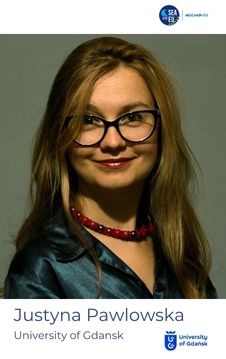
Patent Attorney , Representative before EU Intellectual Property Office
Design Thinking is a systematic approach to complex problems that takes the human perspective as the starting point for developing innovative products and services. Multidisciplinary teams iteratively go through a work process consisting of six different phases: Understand, observe, point of view, ideate, prototype, and test.
In this workshop, we enable you to apply Design Thinking concepts to your idea or daily work. After the workshop is completed, you understand the core principles and main values of the Design Thinking approach and the six phases of the Design Thinking process. You will be able to apply suitable methods within the Design Thinking process, such as creative techniques.
]]>Click on their pictures of the speakers to have more information about their areas of expertise and their CV:
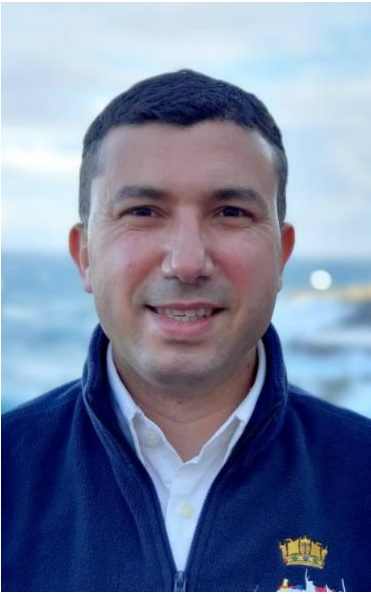
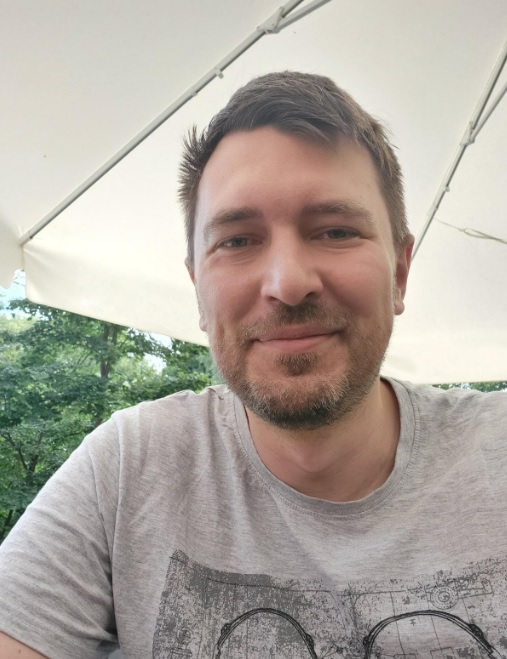
The ability to view things from different points of view by shifting perspectives becomes invariably necessary for the survival of the venture.
During this session, delegates will learn about some of the elements of thinking and how they may be employed to turn problems into opportunities. Reference will also be made to evaluation methods using creative thinking methods.
Speaker: Margaret Mangion (University of Malta)
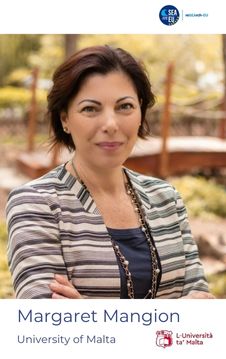
Dr Margaret Mangion is the Director of the Edward de Bono Institute at the University of Malta.
Her research focuses on different aspects of creativity and organisational learning.
She is a member of the International Society for the Study of Creativity and Innovation (ISSCI) and the Possibility Studies Network (PSN). Before moving to a career in academia, Dr Mangion held various posts in the private sector in Malta and in England.
In the current crises, we are witnessing a return of the notion that technology will be fundamental to our future survival.
Speculative design emerged around 20 years ago to provide a counter-approach to mainstream market-oriented design. SD was known (and criticized) for its ability to create future dystopias for many years.
Now, as reality threatens to become more dystopian than fiction, it is important to re-think the role of speculative practice.
The lecture will present the state of Speculative Design practice via personal projects and SpeculativeEdu project experiences and will discuss possible future paths for the practice.
Speaker: Ivica Mitrović (University of Split)
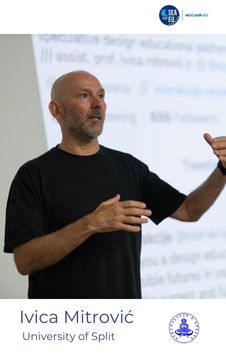
Ivica Mitrović is dealing with speculative scenarios of the near future on the practical and educational levels.
His speculative practice focuses on the implications of important global topics in the local context, and how recent and emerging technological, economic, social, and political changes will impact the context of the Mediterranean South-East of Europe.
He was the coordinator of the SpeculativeEdu, an educational project funded by the ERASMUS+ EU program, to strengthen Speculative Design education by collecting and exchanging existing knowledge and experience whilst developing new methods in the field of speculative design. He is the Head of the Visual Communications Design Department at the Arts Academy, University of Split.
Since start-up rarely have products or services for sale at the outset, it is usually impossible to raise
debt finance from a bank since there is no revenue from which to make loan repayments.
Unless the founders have personal funds available, the other main options are grant-funding from Government schemes or equity finance from investors who buy shares in the company.
This latter option is not easy. Prof Smith will guide attendees through the steps that need to be taken when seeking either forms of start-up funding and review that online training programme that may be accessed through this project.
Speaker: Russell Smith (University of Malta)
Prof Russell Smith began his career in business by starting a software company, whilst still studying for his PhD (RAF and King’s College, London) in the 1980s.
Products from that company sold in 27 countries. In 1985 he joined the pharmaceutical industry, running international drug-development programmes in North America, Europe and Japan finally leading a team of more than 100 staff.
For the last twenty years Russell has specialised in the commercialisation of IP arising from academic research and the teaching & development of student entrepreneurship resulting in the development of the Incumatrixâ„¢ system of entrepreneurship.
In 2012 Her Majesty, The Queen was graciously pleased to approve the Prime Minister’s recommendation that he should receive the Queen’s Award for Enterprise Promotion.
In 1999, Russell co-founded Avidex Ltd, a spin-out company from the University of Oxford and, as Managing Director, raised £1.7m in their first year of operations. Russell left Avidex in December 2000 (after the successful completion of a £10m finance round that valued the company at £25m) to take over Prolysis Ltd, another University of Oxford spin-out.
During his time at Prolysis he raised over £5m of venture capital. In November 2004 Russell became Chairman of Surface Therapeutics Ltd, his third University of Oxford spin-out, leading a finance round that raised £1.5m of venture capital. All three companies have now been sold. Russell has worked to inspire student entrepreneurship since 1999.
Since 2008, Russell led an annual two-day Doctoral Entrepreneurship Workshop for final-year PhD students from Warwick University and Imperial College.
In 2010, he was invited by the National Council for Student Entrepreneurship to deliver its entrepreneurship training programmes.
He is now Director of the Centre for Entrepreneurship and Business Incubation at the University of Malta.
]]>The reSEArch-EU Project not only seeks results in terms of entrepreneurship, stakeholder engagement, open sience, etc. but also intends to serve as a launch pad for researchers in the SEA-EU Alliance.
As part of the dissemination activities, led by the University of Cadiz, the SEA-EU Talent programme is developed with the aim of promoting the work of the SEA-EU Alliance’s young researchers, thus increasing the social impact of their investigations and giving a boost to their careers.
How does it work?
To attain such objectives, the SEA-EU Talent programme will carry out activities such as:
- The promotion of the most outstanding research groups in the SEA-EU Alliance.
- The recording and dissemination where researchers of the Alliance may promote themselves.
- The organization of webinars and other online events where research groups of the Alliance may show their latest research to the public.
- The celebration of in-person events in public places to host discussions between scientist and citizens.
Epigraphy in Mustis (El Krib, Tunisia). A History of the Roman City in the Light of Latin Inscriptions
This research project is concentrated on epigraphical research in the ancient Roman town Mustis (Henchir el Mest in Tunisia), which lay along the main road from Carthage to Theveste, approximately 12 km from Thugga (Dougga) and around 120 km from Carthage. Since 2019 I am a member of the Tunisian-Polish Archaeological Project. The surveys were authorized by the Tunisian National Heritage Institute (INP) and co-organized with the Institute of Archaeology, University of Warsaw. Together with Dr. Mohammed Abid (University of Manouba), we are preparing of catalogue of Latin Inscriptions from Mustis. The last result of our cooperation is the paper published in “Zeitschrift für Papyrologie und Epigraphik” in 2021.
About speaker:
Karol Kłodziński, Assistant Professor in the Department of Ancient History at the University of Gdansk. I am specialized in Latin Epigraphy, Administration of the Roman Empire, History of Roman Provinces (especially Proconsular Africa during Principate), History of Historiography, and Methodology of History. I published my papers e.g. in Pallas. Revue d’Études Antiques, Zeitschrift für Papyrologie und Epigraphik, and Klio. Beiträge zur Alten Geschichte.
It is also linked with the idea of using a more rigorous and empirical approach, which is based on hypotheses to be tested with the market as quickly as possible.
The goal of the webinar is to present an alternative to the traditional business creation process based in long, bureaucratic, business plan oriented procedures.
Speaker: Raúl Estrada (University of Cadiz)
Educational background: Bachelor’s degree in Business Administration, Bachelor’s degree in Social and Cultural Anthropology, Masters degree in Business Internationalization, Masters degree in Arts and Communication, Phd Candidate in Entrepreneurship.
Professional experience: +20 years of cross-sectoral (Telefonica, ICEX, Lightintebox – NYSE:LITB, etc.), international experience (USA, Mexico, Brazil, Netherlands, Germany, China, etc.).
Advisor and board member in a variety of digital Startups.
]]>The workshop is led by renowned and expecienced international experts in Speculative and critical design, applied in the research context. Dr. Michael Smyth and Dr. Ingi Helgason from the Edinburgh Napier University and creative informatics project, coordinated and facilitated by assistant professor Dr Ivica Mitrovic from the Art Academy University of Split and Nikola Balić, Head of Science and Innovation Department at University of Split.
]]>